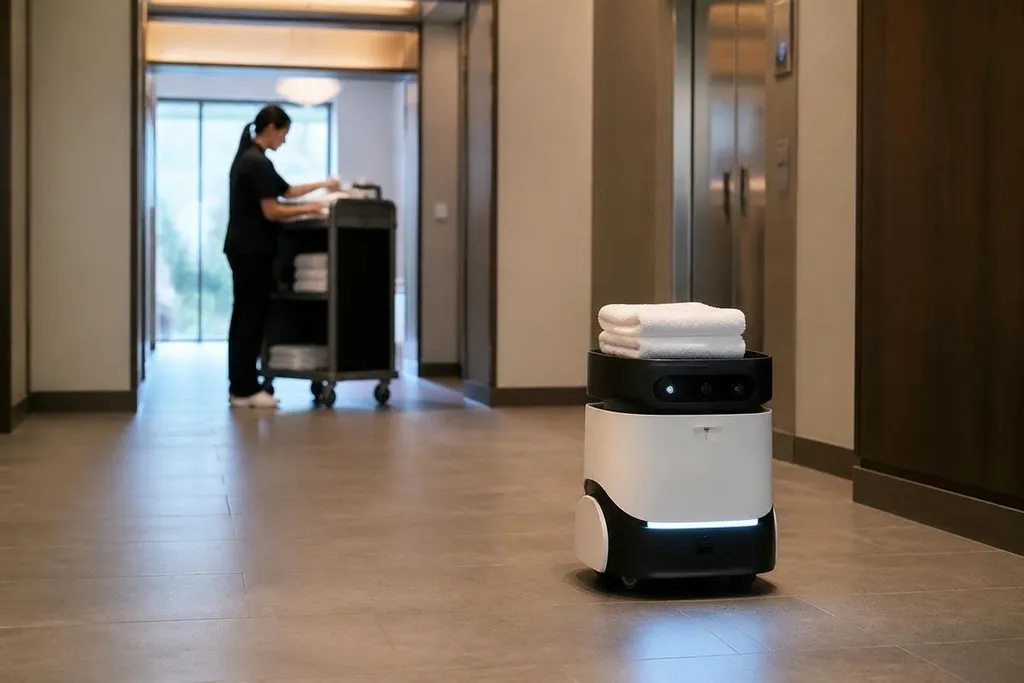
A robot can carry meals, move stock, clean floors, guide visitors, or inspect a site. The value comes from taking on repeat tasks, while the risk comes from putting a machine into places built for people and changing work that staff already understand.
- Best fit: repeatable tasks with clear routes and simple handoffs
- Main gain: less walking, lifting, and routine checking for staff
- Main risk: a robot can stop work when its map, sensors, network, or safety rules fail
Where service robots help
Service robots work best when the task follows a clear pattern. A delivery robot can move items between fixed points, while a cleaning robot can follow mapped floor areas and return to a charging station when its battery runs low.
That changes the human job rather than removing every step. Staff still load items, check exceptions, clear blocked paths, clean sensors, and handle requests that fall outside the robot’s rules.
The useful question is not whether a robot looks capable in a short display. Ask how often the task repeats, how much walking or lifting it involves, and what happens when the normal route is blocked.
The gains depend on the setting
A robot can reduce routine movement in a hotel, hospital, warehouse, restaurant, or public building. That may leave staff more time for work that needs judgment, conversation, or physical care.
The result depends on the handoff between the robot and the person receiving its task. A delivery system, for example, needs clear loading points, a way to confirm the right recipient, and a process for missed deliveries.
If a worker must watch the robot at every turn, the system has moved the task rather than reduced the work.
Service robots can also create useful records. A robot may log route stops, charging events, cleaning areas, or inspection images. Those records help a supervisor find repeat delays, though they also raise questions about who can view the data and how long it stays stored.
A buyer needs the robot’s task, cost, and limits tied to a named machine and date. Robot24.com service robot reporting gives you a record to read before the next section looks at safety risks.
Where the risks appear
People and robots share tight spaces, so safety starts with movement rules. A robot needs sensors that detect people and objects, speed limits for crowded areas, a clear stop control, and a safe response when a sensor or network link fails.
The floor itself matters. Door thresholds, lifts, ramps, glass walls, loose cables, wet patches, and temporary signs can affect a robot’s route. A map that works on a quiet morning may need changes during deliveries, cleaning, or a public event.
Data creates a second risk. Cameras and microphones can record more than the task needs, especially in care settings, workplaces, and public buildings. Owners should define what the robot collects, who checks it, where it is stored, and when it is deleted.
Jobs can change in ways that are easy to miss. Staff may spend less time carrying goods but more time monitoring alerts, moving obstacles, and fixing failed handoffs. I'd approve a service robot only when the owner measures that new work before claiming a saving.
The cost of failure
The machine does not need to break completely to cause trouble. A blocked route can delay a delivery, a dirty camera can stop movement, and a weak wireless signal can leave a task unfinished.
The response plan should cover those ordinary failures. Staff need to know how to pause the robot, move it safely, finish the task by hand, record the fault, and restart the system after the cause is clear.
Support also matters after installation. Check who replaces damaged parts, who updates the software, and whether the robot can run when a cloud service or local network is unavailable. A low purchase price can lose its appeal if each fault needs a specialist visit.
A buying checklist
Use this list before choosing a service robot:
- Name the task: write the exact job, route, handoff, and expected result.
- Watch the site: check doors, lifts, ramps, floor surfaces, people, pets, and temporary obstacles.
- Measure human work: count loading, monitoring, cleaning, recovery, and record keeping.
- Set data limits: decide which sensors can run, who sees the records, and when deletion occurs.
- Test failure recovery: stop the robot, block its route, cut its network access, and confirm the manual process.
- Price the full service: include training, batteries, parts, software fees, repairs, and staff time.
The purchase earns its place when the task is repeatable, the site can support it, and staff have a clear way to take over. If those three conditions are missing, keep the human process and spend the money on a smaller automation step that can be checked.